


LSU Researchers Identify Cellular Trigger Behind Pollution-Driven Lung Damage
June 17, 2026
A team of LSU researchers has pinpointed a specific type of lung cell that acts as a master switch for the harmful inflammation caused by a dangerous class of air pollutants—a discovery that opens the door to new treatments for asthma and other respiratory diseases.


The study, published in the journal Redox Biology, focused on environmentally persistent free radicals, or EPFRs. These are long-lasting, chemically reactive particles produced when organic materials burn incompletely—during wildfires, hazardous waste incineration, and other combustion processes. Unlike many pollutants that break down quickly, EPFRs can linger in the environment and homes for years and continuously generate cell-damaging molecules when entering the body. Breathing them in has been linked to severe, steroid-resistant asthma.
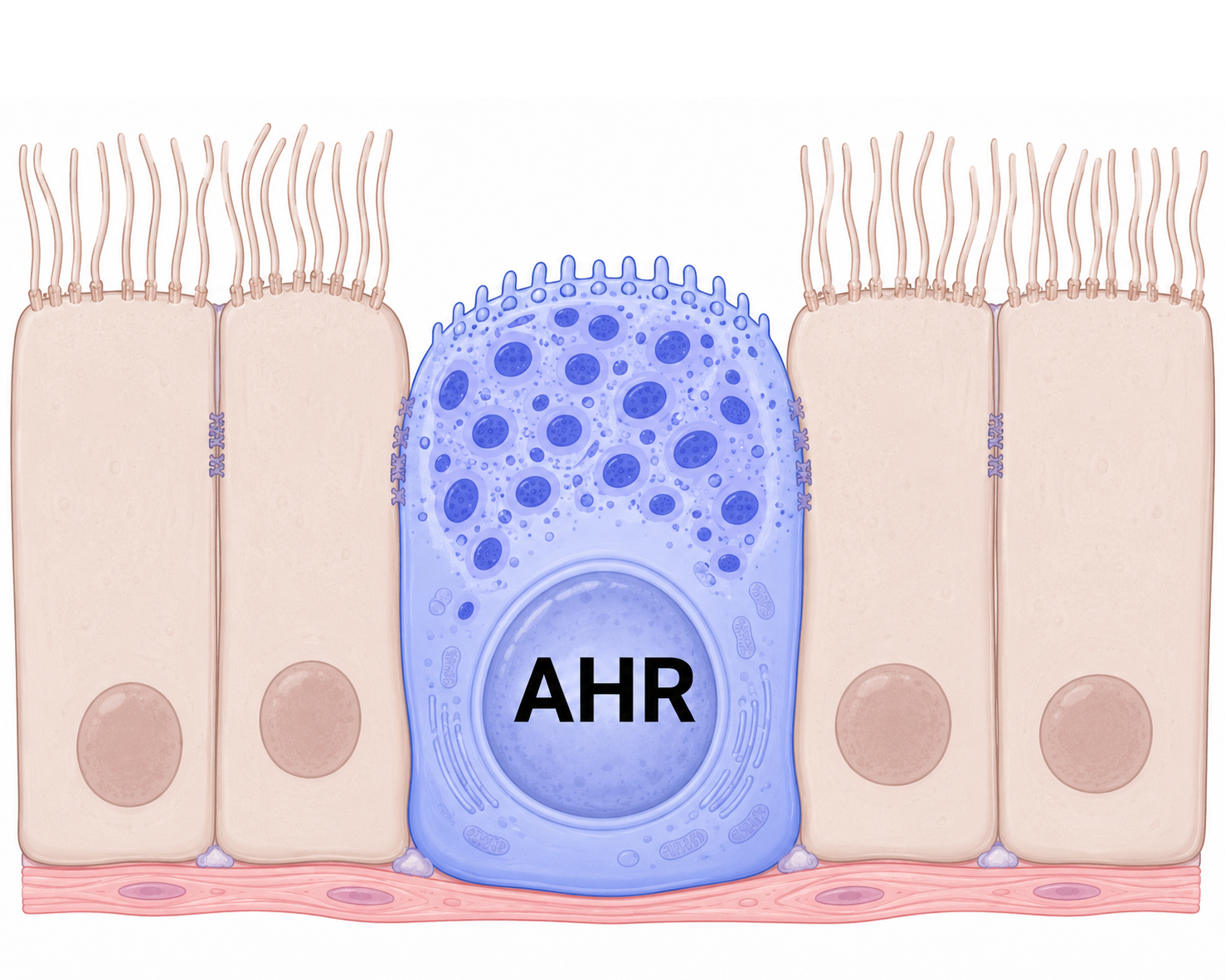
AHR activation inside a club cell in the lungs.
Led by Professor Stephania Cormier of LSU’s Department of Biological Sciences and Pennington Biomedical Research Center, the team zeroed in on “club cells”—specialized cells lining the small airways of the lungs. These cells, shaped like clubs, contain a protein called the aryl hydrocarbon receptor (AHR), which senses environmental toxins. The researchers suspected AHR inside club cells was orchestrating the damaging immune response, so tried switching these receptors off. Instead of the expected lung reaction to EPFRs—including mucus overproduction and scarring—lungs where AHR was switched off remained healthy.
“Our findings reveal club cells act as a critical environmental sensor, translating pollutant exposure into a coordinated wave of inflammation and lung damage,” Cormier said. “By identifying this single control point, we’ve uncovered a promising target for protecting people exposed to pollutants.”
The discovery reshapes how scientists understand the lung’s response to air pollution. Rather than the damage being driven solely by immune cells, the study shows the airway’s own surface cells are giving the orders—an “epithelial-immune crosstalk” that had not been clearly defined before. Interestingly, a different lung cell type appears to play the opposite, protective role, suggesting the lung’s response to air pollution is far more nuanced than previously thought.
The implications reach far beyond the lab. The findings carry real-world weight for communities living near roadways, industrial sites, and waste-treatment facilities. By revealing the molecular machinery behind pollution-driven lung damage, the research suggests drugs targeting airway AHR could one day be used to prevent pollution-related lung disease.