

LSU Research Insights: Shifting Alzheimer’s Care Toward Families Could Transform Lives and Outcomes
January 05, 2026
Today, over 7 million Americans are living with Alzheimer's disease. By 2050, this number is projected to rise to nearly 13 million.
Scott E. Wilks is the W.H. “Bill” LeBlanc LSU Alumni Association Endowed Professor in LSU College of Human Sciences & Education and Director of the LSU Healthy Aging Research Center (HARC).
2026 & BeyonD
As we enter a new year of research and discoveries, our LSU experts are looking forward to the biggest challenges we will face and advances we can anticipate. What might our future look like, “soonish”? How can we help to shape the future we want to see?
In this Q&A, he discusses the near future of efforts to improve the health and well-being of individuals and families affected by Alzheimer’s disease and related dementias (ADRD).
“ Care partners save the U.S. government billions of dollars annually by providing around-the-clock unpaid care, delaying expensive institutional care often covered by public monies. ”
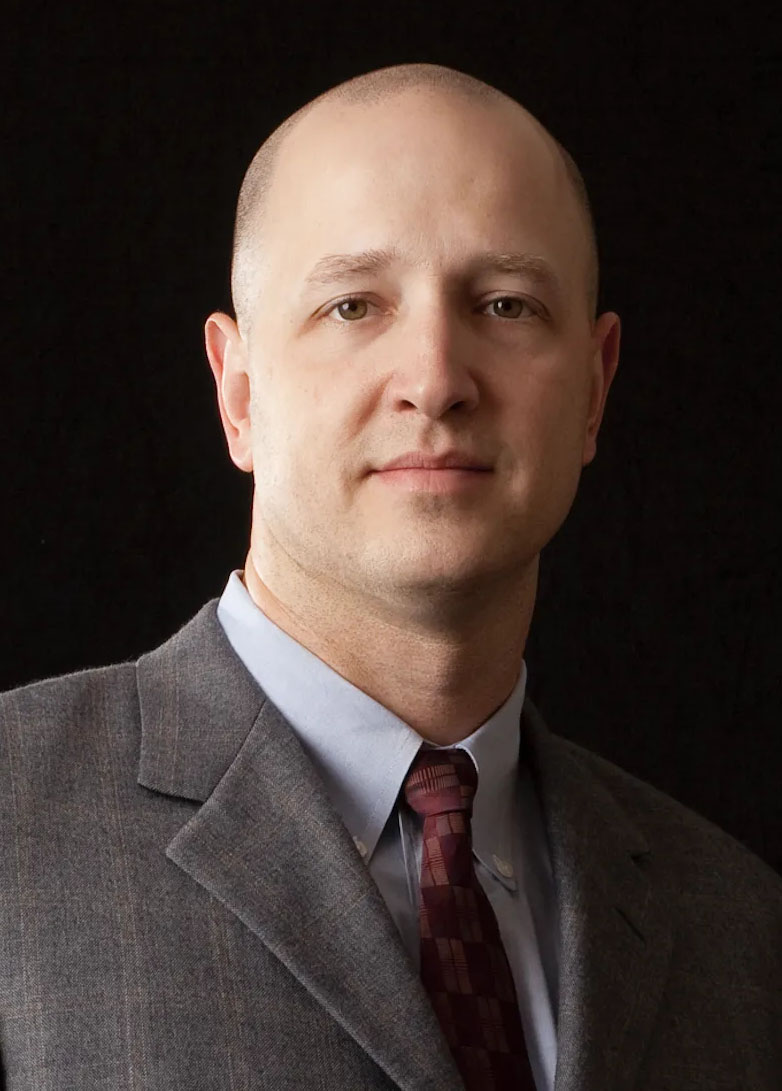
Scott E. Wilks,
LSU professor
Where do you see your field going in the next 1-5 years? What are we likely to see in 2026 in terms of progress, discoveries, emerging technology, or research directions in your field?
For generations, Alzheimer’s disease and related dementias research has focused almost exclusively on trying to find a cure or on more efficiently managing disease symptoms. In short, the research has been patient-focused.
Yet, as we know, those diagnosed with ADRD typically do not live by themselves. The disease is a family struggle on many fronts: cost, accurate assessment, quality care, medication management, decisions related to institutionalization, and more.
Only in recent years have we seen an increase in attention and corresponding funding paid to the health of care partners and other family members and friends close to the person diagnosed with ADRD … and for good reasons.
Research is abundantly clear that the health of the care partner is intimately and mutually connected with the health of the care recipient. As the care partner’s health deteriorates, the rate of decline in the care recipient’s health accelerates.
Also, the longer we can maintain the health and wellbeing for the care partner, the more likely the care recipient can stay in the home and delay institutionalization.
Most of LSU HARC’s recent attention has focused on improving dementia-friendly practices within the first line of defense for these families: primary care providers.
Private-sector organizations have been driving funding attention in this area. Public funding, especially at the federal level, has been slow in catching up.
Over the next five years, I expect a surge in research attention and funding focused on the interrelational health dynamics between care partners and recipients. I am tremendously excited for the LSU HARC team to do its part in amplifying this boom!
What are some challenges you foresee in your field or area of work within the next year that will need addressing?
Funding is the biggest challenge. Federal research expenditures have declined recently. This dip compels researchers to seek other sources of funding, often private foundation funding. It feels as though we are being funneled into an increasingly tighter marketplace for competitive dollars.
Unfortunately, this means that research proposals that may have been funded in previous years are now being tossed aside. My LSU HARC team must be even more tenacious in seeking funding to counter this lull in research support, while we hope the federal spigot opens wider in the future.
Within the research itself, a big challenge has been finding and recruiting underrepresented individuals & families to participate in our studies. Persons who identify with ethnic minority groups, low-income households, and those living in rural communities are often neglected or refuse to participate in aging and ADRD research.
Many harbor a historical mistrust of the healthcare system and research organizations. It is our job to go to these folks; to secure their trust with ethical, culturally sensitive methodology; and to provide proper incentives for them to participate.
Research should always be mutually beneficial between researchers and participants who graciously give their time and energies.
Where would you LIKE to see your field go in the next 1-5 years?
I would like to see far more attention and corresponding funding paid to the health and well-being of ADRD care partners (and care partners for persons with other illnesses and diseases, for that matter).
Care partners save the U.S. government billions of dollars annually by providing around-the-clock unpaid care, delaying expensive institutional care often covered by public monies. Accordingly, it is in the best interest of the government and taxpayers to do everything we can to ensure care partner health.
I hope to see more funding offered to proposals that empirically test the effectiveness of interventions aimed at tangibly improving the care partner’s physical and mental health and overall quality of life.
What are you most excited about in terms of research and discoveries in your field in 2026?
I’m excited about emerging technology, including smart-device apps and AI, and how we can use these in the homes of ADRD care partners and care recipients. At the press of a button, I want to offer consistent reminders to care partners to:
- Keep their own health a priority
- Take respite periods outside the home
- Perform simple exercise activity, such as a quiet walk
- Stay hydrated
- Regularly schedule medical check-ups for themselves
Equally exciting, my team would be able to collect longitudinal data with minimal intrusion on these individuals and families, while we determine which tech components are most beneficial to their health.
What do you wish more people knew about your area of research and its implications?
When people think of ADRD research, they usually think biology: this dreadful umbrella of neurological diseases and the search for a cure.
While we wait for that glorious day when a cure is discovered, over 7 million Americans (including almost 100,000 Louisianans) diagnosed with ADRD, along with their care partners, courageously try to find some semblance of peace and quality of life amid the chaos.
They accept that a cure is unlikely to come tomorrow, or the day after, and they just want relief. Their burdens manifest in health-related social needs. They experience transportation barriers, financial instability, housing instability, food insecurity, environmental safety concerns, and social isolation.
With my LSU HARC team, I am committed to understanding these specific needs and to studying the most effective ways of delivering relief to ADRD care partners and patients alike.
Next Steps
Let LSU put you on a path to success! With 330+ undergraduate programs, 70 master's programs, and over 50 doctoral programs, we have a degree for you.